Little Hands, Big Ideas: How Waste Became Art at Pragati Pathshala
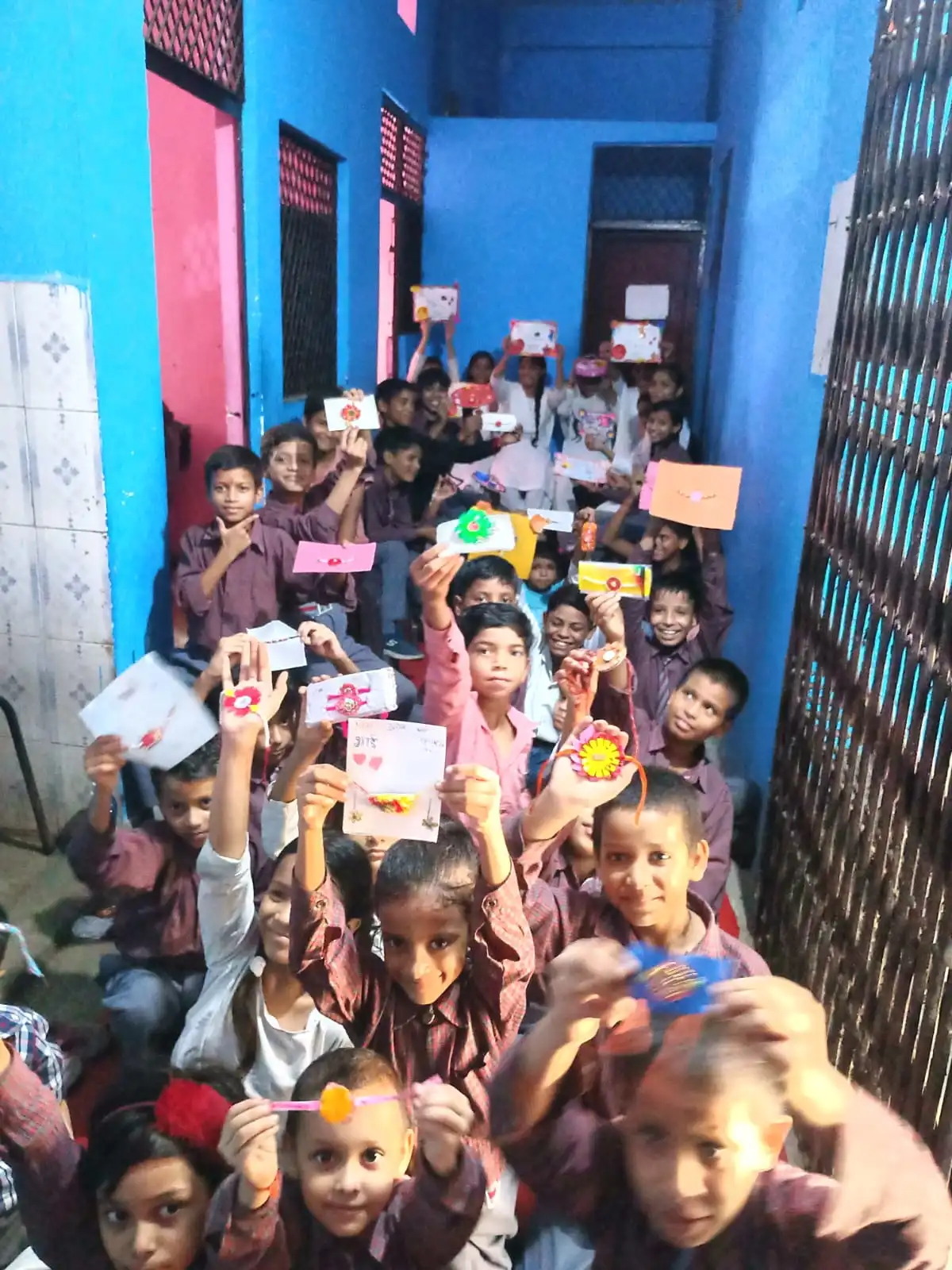
On a Saturday morning at Pragati Pathshala, the classroom does not look like a classroom.
The floor is covered in colour. Biscuit packets, plastic bottles, old newspapers, bottle caps, and packing foam are arranged in careful piles. Children are bent over their work with an intensity that would surprise anyone who had never seen what genuine creative engagement looks like in a child who has been told, their whole life, that art is for someone else.
This is the Waste to Innovate program - and it is one of the most quietly radical things Vidheya Foundation does.
Why Waste?
The decision to use waste materials was not a compromise. It was a deliberate choice rooted in the reality of the communities we serve.
When you use waste - materials that cost nothing, that exist everywhere, that most people consider valueless - you send a message to a child that creativity is not a privilege. You do not need expensive paints or art supplies. You need curiosity and the willingness to see possibility in what others have discarded.
For children who have grown up being treated as less-than, that message is not a small thing.
What the Children Make
Children in Classes 1 through 4 focus on drawing - learning to observe, to represent, to express. But it is the older children, Classes 5 through 8, who work with the waste materials directly.
The things they create would surprise you. Paper flowers with petals cut from biscuit wrappers. Pen holders built from plastic bottles and wrapped in newspaper strips. Fans made from packing foam, painted in colours they mixed themselves. Masks that could hang in a gallery. Paper boats that actually float.
One child - a twelve-year-old girl who had told us on her first day that she was "not good at anything" - made a miniature garden from bottle caps, foam, and a torn piece of cloth. It took her three Saturdays. She named every plant in it.
What the Program Actually Teaches
Art is the visible output. But what the Waste to Innovate program actually teaches is harder to see and more important.
- Problem-solving: When your material is a plastic bottle and your goal is a pen holder, you must think. Every child who works through that problem is developing a habit of mind that will serve them for life.
- Environmental awareness: Children who spend Saturday mornings turning waste into something beautiful do not litter on Sunday. The connection between what we throw away and what we could make from it becomes visceral, not theoretical.
- Confidence: This is the one we see most clearly. A child who holds up something they made with their own hands and sees others respond to it with genuine admiration - that child stands a little straighter leaving the classroom.
- Patience: Creativity cannot be rushed. The children learn this every week.
The Saturday That Changed Our Minds About What a School Can Be
We had a visitor once - a well-meaning volunteer from a corporate CSR program - who watched a Saturday session and said, politely, "This is wonderful. But shouldn't they be doing maths?"
It is a fair question and it deserves a direct answer.
The children at Pragati Pathshala spend their weekdays in academic learning. The Saturday sessions exist precisely because we believe a child is more than their ability to solve equations. A child who has never been invited to make something - to imagine and then create - has been deprived of something essential.
We are not choosing between maths and art. We are insisting that both matter. And on the evidence of every Saturday morning we have run, the children agree.
You Can Be Part of It
The Waste to Innovate program costs almost nothing to run. What it needs most is time - volunteers who can sit with a child on a Saturday morning and say, with complete sincerity, "show me what you made."
If that is something you could offer, we would love to hear from you.
Published by Vidheya Foundation